Monday, March 5, 2012

Licorice Extract Can Help Cure Canker Sores | Dental Equipment ...

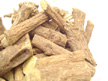
Liquorice or licorice is the root of Glycyrrhiza glabra from which a somewhat sweet flavour can be extracted. The liquorice plant is a legume (related to beans and peas) that is native to southern Europe and parts of Asia. It is called Athimathuram in Tamil, “Yashtimadhu” in Sanskrit and “Mulethi” in Northern India. It is not related to anise, star anise, or fennel, which are the sources of similar-tasting flavouring compounds.

Liquorice grows best in deep valleys, well-drained soils, with full sun, and is harvested in the autumn, two to three years after planting.

Liquorice extract is produced by boiling liquorice root and subsequently evaporating most of the water, and is traded both in solid and syrup form. Its active principle is glycyrrhizin, a sweetener between 30 to 50 times as sweet as sucrose, and which also has pharmaceutical effects.

Liquorice flavour is found in a wide variety of liquorice candies. In Britain and the US these are usually sweet. In most of these candies the taste is reinforced by aniseed oil, and the actual content of liquorice is very low. In continental Europe however, strong, salty candies are popular.

What common oral condition appears as shallow ulcers of different sizes, affects one in five Americans, can be caused by food allergies and hormonal changes, and also can cause severe mouth pain? Commonly referred to as “canker sores,” recurrent aphthous ulcers (RAU) now can be treated by an extract in licorice root herbal extract, according to a study published in the March/April 2008 issue of General Dentistry, the Academy of General Dentistry’s (AGD) clinical, peer-reviewed journal.

The authors examined the effects of an over-the-counter medicated adhesive patch (with extract from the licorice root) for treatment of RAU versus no treatment. After seven days of treatment, ulcer size in the group who received the adhesive patch with licorice extract was significantly lower, while ulcer size in the no-treatment group had increased 13 percent.

Licorice root extract was used as a prescribed treatment for gastric ulcers until the 1970s, according to the study. In its original form, licorice root extract has a very strong taste. However, when combined with a self-adhering, time-release, dissolving oral patch, the taste is mild and pleasant.

Liquorice or licorice is the root of Glycyrrhiza glabra from which a somewhat sweet flavour can be extracted. The liquorice plant is a legume (related to beans and peas) that is native to southern Europe and parts of Asia. It is called Athimathuram in Tamil, “Yashtimadhu” in Sanskrit and “Mulethi” in Northern India. It is not related to anise, star anise, or fennel, which are the sources of similar-tasting flavouring compounds.

Liquorice grows best in deep valleys, well-drained soils, with full sun, and is harvested in the autumn, two to three years after planting.

Liquorice extract is produced by boiling liquorice root and subsequently evaporating most of the water, and is traded both in solid and syrup form. Its active principle is glycyrrhizin, a sweetener between 30 to 50 times as sweet as sucrose, and which also has pharmaceutical effects.

Liquorice flavour is found in a wide variety of liquorice candies. In Britain and the US these are usually sweet. In most of these candies the taste is reinforced by aniseed oil, and the actual content of liquorice is very low. In continental Europe however, strong, salty candies are popular.

What common oral condition appears as shallow ulcers of different sizes, affects one in five Americans, can be caused by food allergies and hormonal changes, and also can cause severe mouth pain? Commonly referred to as “canker sores,” recurrent aphthous ulcers (RAU) now can be treated by an extract in licorice root herbal extract, according to a study published in the March/April 2008 issue of General Dentistry, the Academy of General Dentistry’s (AGD) clinical, peer-reviewed journal.

The authors examined the effects of an over-the-counter medicated adhesive patch (with extract from the licorice root) for treatment of RAU versus no treatment. After seven days of treatment, ulcer size in the group who received the adhesive patch with licorice extract was significantly lower, while ulcer size in the no-treatment group had increased 13 percent.

Licorice root extract was used as a prescribed treatment for gastric ulcers until the 1970s, according to the study. In its original form, licorice root extract has a very strong taste. However, when combined with a self-adhering, time-release, dissolving oral patch, the taste is mild and pleasant.

You can find more dental office supplies and dental burs at zetadental.co.uk.

Check Out the Benefits of Licorice

Kenneth Tiger.

Rebecca Spencer is the author of this article on lavender herb. Find more information, about benefits licorice here

View all articles by Kenneth Tiger.

Are you aware of the benefits of licorice? The root of this plant is known by numerous names namely, gan zao and sweet root and is greatly helpful in tackling ailments such as sore throat, ulcers, bronchitis and more. Benefits licorice includes treating infections caused by viruses, such as Hepatitis. It is possible to find supplements of licorice in the form of capsules, liquid extracts and tablets. In fact, the dried and powdered licorice peels is also consumed. It is also possible to consume licorice root tea which is highly beneficial in treating Hepatitis C. It is advised to be cautious while consuming licorice as it contains glycrrhizin.

Consuming licorice beyond a certain level is known to raise the blood pressure and lower potassium levels, salt as well as water retention in body. In addition, it can also affect the levels of hormone in body like cortisol as well as drugs and steroids like prednisone. You must also be cautious while using the supplement in combination with medication as it lowers the potassium levels in body. In addition, the extract is not recommended for pregnant women as it could various heart diseases and blood pressure to the women. Yet, the benefits licorice are numerous, which has made it extremely popular among people who are fighting ulcers, bronchitis and other associated ailments. Licorice is also beneficial in handling respiratory troubles ranging from cold, sore throat and tuberculosis.

Benefits licorice includes in its laxative property which makes it highly beneficial against mouth, stomach and gastric ulcers. It is also helpful in working against viruses which cause shingles and herpes.

According to various legends, licorice was used by women in the bygone centuries to achieve relief from premenstrual syndrome and menopause as well. The presence of isoflavones in licorice has estrogenic effects making it perfect for use in premenstrual conditions. Moreover, it also has the ability to increase the rate of heartbeat and consuming excessive potassium in blood causes heart problems. The other added benefits of licorice are their exclusive property to battle cancer, heart diseases, HIV and Hepatitis B and C. The hardening of arteries or arthrosclerosis can be resolved by dissolving the cholesterol deposits in body.

Benefits licorice includes the ability to burn fat at a faster rate. In addition, lavender herb must also be added in your daily diet as it possesses antibacterial properties. It can be used as a cleaning agent to create a bacteria free environment. As a health supplement, lavender massage promotes relaxation of body. The lavender tablets are greatly useful in combating insomnia. They must be taken in small doses, after taking the advice of your doctor. Like licorice, lavender must also not be injected into pregnant nursing mother. However, lavender lotions are deemed to be simply perfect during pregnancy and for children as well. Thus, if you are interested in the product and would like to give it a try, it is advised to check out the web. There are various websites which can help you in buying the products of your choice.

Rebecca Spencer is the author of this article on lavender herb. Find more information, about benefits licorice here


Comments

No Comments Found.

Sunday, March 4, 2012

anthony's root beer barrel | High Country Wild Root Kombucha

High Country Wild Root Kombucha

Type: Root Beer Comes In: 16oz glass bottle
Available: online, everywhere Obtained in: Wegman’s
Head: Small Sweetener: cane sugar
Caffeine: No
Website: http://www.hckombu.com/

ug, this is the most disgusting thing i have ever smelled or tasted. i was hoping it would be at least reasonably tasty as i hear a lot of how great kombucha is for you. but if this is what it tastes like, i am astounded that anyone would consume this, for any reason at all. if you are unfamiliar with kombucha, it is basically a fermented tea with yeast and bacteria and enzymes and junk. i would say it tastes kind of like that sounds. a rotten, basically disgusting mess. wow, people really drink this? i just can’t believe how horrible this tastes. it is like someone threw up vinegar and seltzer and you decided to bottle that. i took two sips and that was one too many. perhaps even two too many. holy slugs and snails! we have a new low ladies and gentlemen!
Ingredients:organic kombucha tea* and sarsaparilla root along with an extract of the following organic herbs: licorice root, star anise, yellowdock root, burdock root, wild cherry bark, dandelion root, vanilla bean and wintergreen.
*kombucha is a culture fermented in a base of purified water, organic tea and organic cane sugar

Anthony’s Rating: 1
User’s Rating: 0
# of ratings:0

Log in to save your ratings and personal root beer list!

Saturday, March 3, 2012

The Chinese Herb Licorice Root For Cavities & Gum Disease ...

By Cathy on January 11, 2012

Chinese herbs for cavitiesOne of the most commonly used Chinese herbs is licorice root and Web MD recently mentioned how licorice root can help prevent and treat tooth decay and gum disease.

According to a new study in the Journal of Natural Products, licorice root may help keep teeth healthy.  But you won't find the beneficial ingredients in licorice candy.  Licorice candy is mostly sugar and in the U.S. often flavored with anise oil.

The herb licorice root is in nearly every herbal formulations in Traditional Chinese Medicine.  The main reason for its popularity is its sweet flavor and its remarkable ability to guide other herbs to all 12 channels in the body.   This might sound a little odd, but if you've ever dug up a small licorice plant you can see the roots tend to go in all directions.  It is an interesting quality about this herb, because many herb roots don't travel outwardly, they simple grow down. But the licorice plant has roots that are born to run.   

I was once digging up a small 5 foot tall licorice that has meandered into the wrong garden space.   As we followed the roots to clean up the space, they went 10-15 feet in several different directions. This Chinese herb seems to act the same way in the body and this is often why a very small amount, usually 3%- 6%  of Traditional Chinese herb formulas often contain licorice. (Also known as Gan Cao.)  Gan Cao helps other herbs in a formula travel to all 12 channels in the body.  This is a very rare quality, there are only a few herbs with the ability to travel to all areas of the body.

I consider it an added bonus that licorice prevents tooth decay.  A very small amount of licorice  (3%) is found in our iSleep Herb Pack.  It has traditionally been part of the 800 year old formula that iSleep is based upon.  No reason to change something that 800 years of use has already proved successful.   (See the study here.)

The Active Ingredients

The two predominant compounds in licorice, licoricidin and licorisoflavan A, were found to be the most effective in inhibiting the growth of cavity-causing bacteria. These and other compounds found in licorice root were also shown to prevent the growth of bacteria associated with periodontitis, an inflammatory disease that can destroy the bones, gums, and tissue that maintain teeth.

Warnings about the effects of licorice for those with high blood pressure need some explanation.  Studies on licorice root extract have shown a  dose of  60 grams or more per 100g formula had side effects.  However, this dose is at least 10X higher than the safe and recommended dosage used in Traditional Chinese Medicine.  Licorice has been used safely and effectively for thousand of years.  There is no documented historical use of licorice ever being used in Traditional Chinese Medicine at a dose of 60 grams in a 100g formula.  Like anything, if you abuse an herb, just like caffeine, or any drug, there can be serious side effects. It is always important to know the safe and correct dose of any medication.

P.S.   Licorice root raw slices have a lovely little flavor if you need something healthy to chew on during the day. All Chinese markets sell them because they are often thrown into soups or used for a cup of tea. A lovely Asian tradition that we now know also protects our teeth.

Bookmark and Share

Category: Chinese Herbs | Tags: , , , , , , , , , , , , , , , , , , , , Comment »

Dried Licorice Root Fights The Bacteria That Cause Tooth Decay ...


Go Back   IhAv.NET > Information & News > RSS News > Health and Fitness

Health and Fitness All your Health and Fitness news will appear here


Tags
bacteria, decay, disease, dried, fights, gum, licorice, root, tooth

Reply
Dried Licorice Root Fights The Bacteria That Cause Tooth Decay And Gum Disease
Old 01-06-2012, 12:18 PM   #1 (permalink)

Senior Member

 
! D33NA !'s Avatar
 

Join Date: Mar 2008

Posts: 7,584

Level: 59 [♥ Bé-Yêu ♥♥ Bé-Yêu ♥♥ Bé-Yêu ♥♥ Bé-Yêu ♥♥ Bé-Yêu ♥]

Thanks: 0

Thanked 0 Times in 0 Posts

FlashDried Licorice Root Fights The Bacteria That Cause Tooth Decay And Gum Disease


Scientists are reporting identification of two substances in licorice - used extensively in Chinese traditional medicine - that kill the major bacteria responsible for tooth decay and gum disease, the leading causes of tooth loss in children and adults. In a study in ACS' Journal of Natural Products, they say that these substances could have a role in treating and preventing tooth decay and gum disease...

More...

! D33NA ! is offline   Submit to DiggWTF?Submit to RedditSubmit to FurlSubmit to Del.icio.usSubmit to JeqqSubmit to SpurlSubmit to FacebookStumble It Reply With Quote Quick reply to this message
Reply


Currently Active Users Viewing This Thread: 1 (0 members and 1 guests)
 
Thread Tools
Display Modes Rate This Thread

Posting Rules

You may post new threads

You may post replies

You may not post attachments

You may not edit your posts


HTML code is Off


Similar Threads
Thread Thread Starter Forum Replies Last Post
How did I get such bad tooth decay? Wen Health 0 03-19-2009 09:11 PM
Does dried semen decay and completely disappear? Joseph Health 0 11-24-2008 04:35 PM
When a DENTIST loses a tooth (due to disease, decay or trauma), what Beth K Health 0 10-16-2008 08:12 PM
Root beer and licorice lovers? ugly_forensics Music 0 07-22-2008 05:43 PM
Can indigestion lead to tooth decay or tooth problems? phatgal_1973 Health 0 02-11-2008 02:22 AM
All times are GMT -4. The time now is 04:37 AM.
Page generated in 0.10194111 seconds (100.00% PHP - 0% MySQL) with 19 queries
 

Friday, March 2, 2012

Licorice Treats | Supplements-Pedia

This site has been suspended. If you're the owner of this website,
please contact FatCow Web Hosting.

Thursday, March 1, 2012

Licorice Root Extract | Herbal Extracts

Product Name:Licorice Root Extract
Specification:40% glabridin
Detection strategy:HPLC
Botanical Name:Glycyrrhiza glabra L.
Products Description:Licorice Root Extract is from the licorice vegetation called Glycyrrhiza Glabra and Glycyrrhiza Uralensis. It incorporates glycyrrhizin, a quite sweet syrup or powder which has medicinal attributes. Licorice Root Extract is being examined for its anti-viral consequences.